
Discover how SMEs and healthcare providers can overcome 2026 staffing challenges while accelerating digital transformation. Expert insights on recruitment, retention, and growth strategies.
The 2026 Staffing Reality
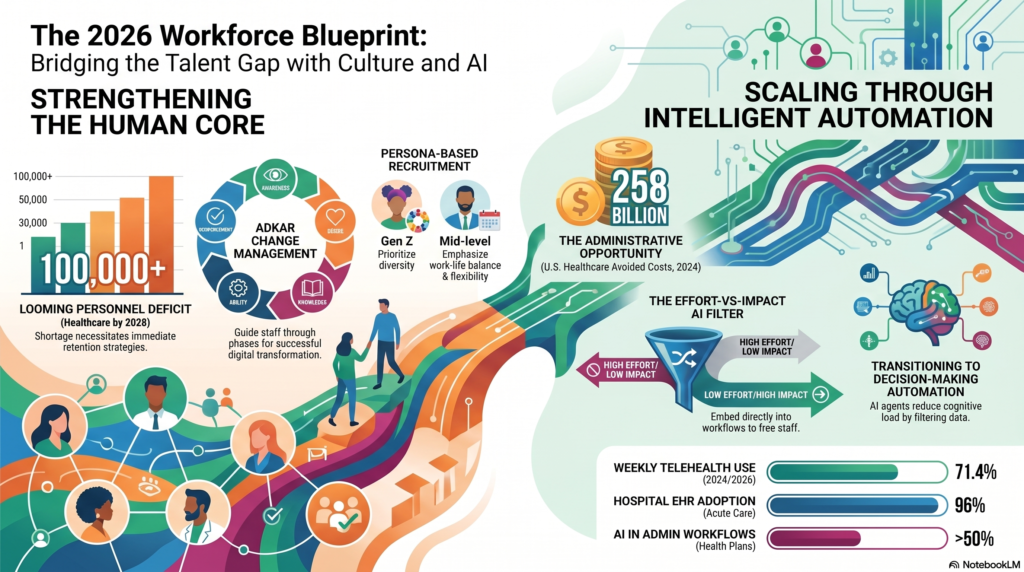
The opening months of 2026 have revealed an uncomfortable truth for small and medium-sized enterprises (SMEs) and healthcare providers across Asia: staffing challenges are no longer a temporary crisis—they’re a structural business problem.
While larger corporations leverage sophisticated talent acquisition platforms and in-house recruitment teams, SMEs and healthcare organizations are caught in a different bind. They face intense competition for talent, limited recruitment budgets, and the growing pressure to adopt digital tools—all while trying to maintain service quality and profitability.
Yet within this challenge lies an opportunity. Organizations that address staffing strategically while investing in digital capabilities are positioning themselves to thrive in the second half of 2026 and beyond.
This article explores the intersection of staffing challenges and digital growth, examining what SMEs and healthcare providers must prioritize right now.
The Core Staffing Challenges Facing SMEs and Healthcare Providers in 2026
1. Talent Shortages in High-Demand Roles
The most pressing issue remains critical skill gaps. Healthcare providers struggle to recruit:
- Registered nurses and clinical specialists
- Diagnostic and technical staff
- Healthcare IT professionals
- Patient care coordinators
For SMEs across sectors, the shortages extend to:
- Backend and full-stack developers
- Digital marketing specialists
- Operations and supply chain professionals
- Skilled trades and technical roles
The data: Organizations report that 65% of open positions remain unfilled for 3+ months, directly impacting service delivery and revenue growth.
2. Geographic Talent Mobility Constraints
In South and Southeast Asia, talent concentration creates geographic bottlenecks:
- Major metropolitan centers (Manila, Bangkok, Lahore, Hanoi) have oversaturated talent markets
- Tier-2 and Tier-3 cities lack sufficient pools of qualified candidates
- Remote work policies have improved mobility but remain inconsistent across industries
- Regulatory differences between countries complicate cross-border hiring
Healthcare-specific challenge: Licensing and credential verification requirements differ significantly across Pakistan, Philippines, Thailand, and Vietnam, slowing recruitment timelines.
3. Retention and Burnout in Healthcare Settings
Healthcare staffing isn’t just about hiring—it’s about keeping talent engaged. 2026 data reveals:
- 42% of healthcare workers report burnout as a primary reason for considering job changes
- Wage stagnation in many regions fails to match cost-of-living increases
- Limited career development pathways push mid-level professionals toward larger hospitals or international opportunities
- Emotional labor and resource constraints drive early-career attrition
4. Budget Constraints and Cost Pressures
SMEs and mid-sized healthcare providers operate on tight margins:
- Recruitment advertising costs have doubled in 3 years
- Staffing agency commissions consume 15-25% of hiring budgets
- Technology investments compete with operational expenses
- Many organizations lack dedicated HR/recruitment infrastructure
The Digital Imperative: Why 2026 Is a Turning Point
Why Digital Transformation Can’t Wait
Organizations that delay digital adoption in 2026 face compounding disadvantages:
Candidate Expectations: Modern job seekers expect seamless digital recruitment experiences. A cumbersome application process or lack of communication transparency directly costs you qualified candidates.
Operational Efficiency: Manual hiring processes consume 15-20 hours per open position. Digital tools reduce this to 6-8 hours, freeing HR teams for strategic work.
Data-Driven Decisions: Digital systems provide hiring analytics—time-to-fill, cost-per-hire, candidate source performance—enabling continuous improvement.
Competitive Positioning: SMEs that adopt recruitment technology and digital HR tools signal professionalism and growth to candidates, improving employer brand perception.
The Healthcare Provider Advantage
Healthcare organizations that digitize recruitment and operations gain specific benefits:
- Faster credentialing verification through digital document management
- Improved shift scheduling and staffing predictability
- Enhanced employee onboarding reducing time-to-productivity
- Better data on staffing patterns enabling proactive hiring
Key Areas SMEs and Healthcare Providers Should Address in 2026
1. Recruitment Technology and Process Automation
The Gap: Only 28% of SMEs use dedicated applicant tracking systems (ATS). Most rely on email and spreadsheets.
What to Implement:
- Applicant Tracking Systems (ATS): Streamline applications, screening, and communication
- Job advertising automation: Multi-platform posting across LinkedIn, industry boards, and local sites
- Screening workflows: Automated initial screening using keyword matching and skill assessment
- Communication tools: Automated status updates keep candidates informed, improving experience
Healthcare-specific tools:
- License and credential verification software
- Background check integration
- Compliance tracking for regulatory requirements
Investment level: Basic ATS platforms cost $1,500-5,000/year for SMEs. ROI typically appears within 6 months through reduced hiring time and improved candidate quality.
2. Employer Brand and Digital Presence
The Challenge: SMEs and regional healthcare providers have weak digital employer brand presence, making recruitment harder.
Strategic Actions:
- Optimized careers page: A dedicated page on your website with clear job listings, company culture content, and employee testimonials
- LinkedIn optimization: Active company profile with regular content about culture, opportunities, and industry insights
- Content marketing: Blog posts, videos, and case studies showcasing your organization’s impact (particularly effective in healthcare)
- Glassdoor and review sites: Monitor and respond to reviews; encourage current employees to share positive experiences
- Social media presence: Authentic, consistent posting on Instagram, Facebook, and LinkedIn showing workplace culture
Healthcare example: A regional hospital sharing stories of nurses’ impact on patient outcomes, with behind-the-scenes content, significantly outperforms competitors in recruitment quality.
3. Remote and Flexible Work Infrastructure
The Reality: Organizations resistant to flexible work are losing candidates to competitors.
2026 Considerations:
- Hybrid models: Many roles (administrative, scheduling, content creation) can be fully remote or hybrid
- Asynchronous tools: Video interviews, recorded training modules, and async communication reduce scheduling friction
- Remote healthcare roles: Telemedicine support, medical coding, healthcare data analysis, and patient scheduling are increasingly remote
- Global hiring: Flexible work enables access to talent beyond geographic constraints
SME advantage: Smaller organizations can often move faster on flexible policies than large enterprises, making them more attractive to top talent.
4. Data Analytics for Talent Planning
Moving Beyond Gut Feel: 2026 demands evidence-based hiring decisions.
Key Metrics to Track:
- Time-to-fill: How long each role takes to fill
- Cost-per-hire: Total recruitment spend ÷ number of hires
- Source effectiveness: Which job boards, referrals, or agencies deliver best candidates
- Retention rates: Especially critical by role and manager in healthcare
- Offer acceptance rate: Indicates whether compensation or positioning is competitive
Healthcare-specific analytics:
- Staffing-to-patient ratios by department
- Turnover rates by unit/specialization
- Vacancy impact on service delivery
Tools: Most modern ATS platforms include built-in analytics. For deeper insights, integrate with business intelligence tools like Tableau or Power BI.
5. Upskilling and Internal Mobility Programs
The Strategic Shift: Rather than recruiting every role externally, develop internal talent.
2026 Initiatives:
- Digital skills training: Equip existing staff with IT, data, and digital marketing capabilities
- Career pathway clarity: Help employees see advancement opportunities, improving retention
- Cross-functional projects: Expose talent to different departments, identifying future leaders
- Mentorship programs: Pair junior staff with experienced professionals
- Partnership with educational institutions: Create pipeline programs with universities and vocational schools
Healthcare impact: A nurse with administrative training can transition to nurse manager roles. Clinical staff trained in healthcare data analysis become valuable operational resources.
6. Employer Value Proposition (EVP) Beyond Salary
The Challenge: SMEs can’t outbid large organizations on salary. Competing requires a compelling EVP.
Elements That Matter:
- Career development: Clear learning pathways and skill development opportunities
- Purpose and impact: Particularly resonant in healthcare—emphasize patient outcomes and community impact
- Work environment: Supportive management, collaborative culture, reasonable workload
- Work-life balance: Realistic expectations and flexibility
- Benefits: Healthcare coverage, wellness programs, professional development budgets
- Recognition: Regular, meaningful acknowledgment of contributions
Communication: Your EVP must be evident in every recruitment touchpoint—from job ads to interviews to onboarding.
Sector-Specific Focus: Healthcare Providers’ Unique Needs
Regulatory Compliance in Digital Hiring
Healthcare organizations face additional complexity:
- Data protection: Patient data exposure through loose hiring processes creates liability
- Credential verification requirements: Licenses, certifications, background checks must be thoroughly documented
- Infection control and safety training: Must be completed before day-one; digital onboarding accelerates this
- Ongoing compliance tracking: Certifications expire; systems must trigger renewals
Solution: Implement healthcare-specific HRIS (Human Resource Information Systems) that embed compliance workflows.
Addressing Healthcare Burnout Through Smart Staffing
Digital tools enable proactive staffing management:
- Predictive analytics: Identify units approaching dangerous understaffing before burnout occurs
- Shift optimization: Balance workload across teams, reducing individual burden
- Staffing flexibility: On-call, per-diem, and contractual staff pools reduce permanent staff strain
- Turnover prediction models: Identify high-risk staff early; implement retention interventions
Strategic Roadmap: A Phased 2026-2027 Implementation Plan
Phase 1: Foundation (Now–June 2026)
Focus: Quick wins and infrastructure
- Implement or upgrade ATS platform
- Audit current recruitment processes; identify bottlenecks
- Launch careers page and optimize LinkedIn company profile
- Train HR team on new tools
Expected impact: 20-30% reduction in time-to-fill; improved candidate experience
Phase 2: Enhancement (July–September 2026)
Focus: Scaling and optimization
- Develop and launch employer brand content strategy
- Implement data analytics and reporting
- Roll out flexible work policies where applicable
- Begin partnerships with educational institutions or staffing agencies
Expected impact: Improved candidate quality; clearer hiring ROI; stronger employer brand
Phase 3: Optimization (October–December 2026)
Focus: Integration and strategic talent planning
- Integrate multiple recruitment channels into centralized dashboard
- Launch upskilling and internal mobility programs
- Implement predictive analytics for talent planning
- Establish ongoing EVP refinement based on hiring feedback
Expected impact: Sustainable competitive advantage in talent acquisition; improved retention
Investment and ROI: What This Costs and What You’ll Gain
Typical Investment Breakdown (Annual)
| Category | Cost Range (USD) | Priority |
|---|---|---|
| ATS Platform | $1,500–$5,000 | High |
| Recruitment Advertising | $3,000–$10,000 | High |
| HR/Recruitment Training | $500–$2,000 | Medium |
| Employer Branding Content | $2,000–$8,000 | Medium |
| Analytics/BI Tools | $500–$3,000 | Medium |
| Staffing Partnerships (if needed) | Variable | As needed |
| Total | $7,500–$28,000 | — |
Expected ROI (12-month horizon)
- Reduced time-to-fill: 30-40% savings = 2–4 weeks faster hiring × salary cost savings
- Improved quality: Better retention = reduced turnover costs (typically 50-200% of annual salary per replacement)
- Operational efficiency: Reduced HR workload = reallocated capacity to strategic initiatives
- Reduced cost-per-hire: Fewer agency referrals = savings on commissions
Real example: A 50-person SME hiring 10 people annually at average cost-per-hire of $3,000 could reduce to $1,800 through ATS efficiency. For a healthcare provider, improved retention alone—reducing turnover by 15%—saves $50,000+ annually.
Common Pitfalls to Avoid
1. “Technology Without Strategy”
Implementing an ATS without first defining your recruitment process, employer brand, and hiring criteria wastes investment. Start with strategy; tools follow.
2. Underestimating Change Management
Staff resistance to new tools and processes derails adoption. Invest in training and involve teams in selection.
3. Neglecting Candidate Experience
Technology should improve experience, not create friction. A clunky application process or silent treatment during hiring frustrates candidates. Prioritize transparency and communication.
4. Ignoring Data
Collecting metrics without acting on them wastes data investment. Review hiring analytics monthly; adjust based on insights.
5. One-Size-Fits-All Approach
What works for recruiting software engineers differs from healthcare staffing. Customize strategies by role, region, and function.
The Bottom Line: Digital Growth Enables Staffing Solutions
The organizations winning in 2026 aren’t those throwing unlimited money at hiring or those ignoring digital transformation. They’re the ones that integrate smart recruiting technology, transparent employer branding, and strategic talent planning into a coherent system.
For SMEs and healthcare providers, this integration is achievable without Fortune 500 budgets. It requires:
- Commitment: Allocating time and resources to recruitment strategy
- Focus: Prioritizing the highest-impact initiatives first
- Adaptation: Continuous improvement based on data and feedback
- Investment: Recognizing that recruitment is a core business function, not a cost to minimize
The 2026 talent market rewards organizations that take staffing seriously and invest in digital infrastructure. Those that act now will have competitive advantage through 2027 and beyond.
Ready to Transform Your Recruitment?
At HIB Recruitment Services, we help SMEs and healthcare providers across South and Southeast Asia build recruitment systems that work. From staffing challenges in the Philippines and Pakistan to digital transformation strategies in Thailand and Vietnam, we understand your regional market.
We offer:
- Expert recruitment consulting tailored to your sector
- Candidate screening and placement services
- Labor market intelligence and hiring benchmarks
- Digital recruitment strategy development
Get started: Contact us at contact@hibrecruitmentservices.com or explore our labor market insights on Patreon at patreon.com/c/HIBRECRUITMENTSERVICES

Leave a Reply