
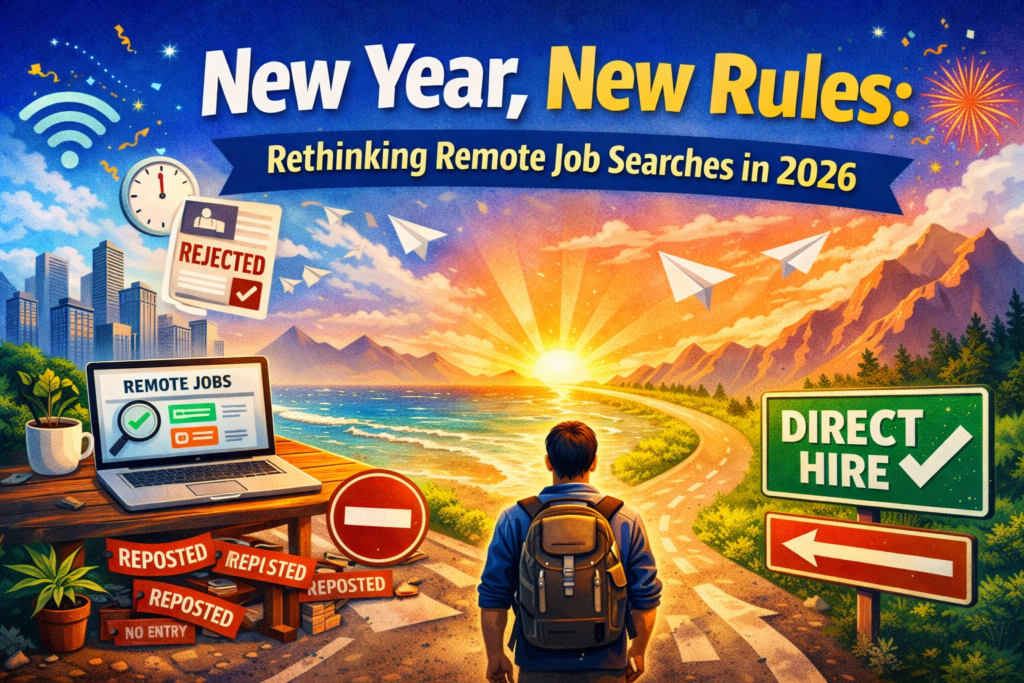
Remote Jobs in 2026 are more competitive than ever due to global talent access, AI hiring tools, and skill-based screening. Learn why competition is rising and how to stand out.
The Global Rise of Remote Jobs in 2026
Remote jobs in 2026 are no longer a workplace trend—they’re the default operating model for many companies. Organizations now hire without borders, allowing them to access specialized talent faster and at lower costs. As a result, remote jobs in 2026 are available across technology, healthcare, finance, marketing, education, and even government-backed initiatives.
How Remote Work Evolved from 2020 to 2026
Remote work began as a necessity during the pandemic. However, by 2026, it has matured into a structured, policy-driven employment model. Companies now design roles as remote-first, not remote-optional. Performance metrics, collaboration tools, and digital workflows have replaced physical presence.
According to global workforce studies published by institutions like the World Economic Forum , productivity and employee satisfaction increased significantly in distributed teams when supported by the right technology.
Industries Dominating Remote Hiring
Remote jobs in 2026 are led by:
- Software & AI development
- Digital marketing & SEO
- Recruitment & HR advisory
- Financial services & accounting
- Health tech & medical billing
- Online education & learning design
These industries prioritize output over hours worked, making remote roles sustainable and scalable.
Why Competition for Remote Jobs in 2026 Is at an All-Time High
Competition is intense because remote jobs in 2026 attract applicants from every corner of the world. A single role can receive thousands of applications within days.
Global Talent Pool Expansion
Employers no longer limit hiring to one country. A company based in the US can hire talent from Asia, Europe, Africa, or Latin America. While this creates opportunity, it also increases competition dramatically.
AI-Powered Hiring & ATS Filters
Applicant Tracking Systems (ATS) and AI screening tools now eliminate up to 75% of resumes before a human ever reviews them. Candidates who don’t optimize for keywords, role alignment, and measurable outcomes are filtered out instantly.
Economic Shifts & Cost Optimization
Businesses aim to reduce overhead costs. Hiring remote professionals allows them to scale efficiently, but it also means employers can be selective, choosing candidates who deliver maximum ROI.
Skills That Matter Most for Remote Jobs in 2026
Remote jobs in 2026 prioritize skills over degrees. Employers care less about where you studied and more about what you can do.
Digital-First Hard Skills
- Data analysis
- AI & automation tools
- Cloud collaboration platforms
- SEO & growth marketing
- Financial modeling
- Cybersecurity basics
Human-Centric Soft Skills
- Asynchronous communication
- Time-zone management
- Self-leadership
- Critical thinking
- Adaptability
Candidates who combine both sets of skills gain a competitive edge.
How Employers Screen Candidates for Remote Jobs
Skills-Based Hiring Models
Employers increasingly use paid trials, case studies, and task-based assessments. Traditional interviews are being replaced with real-world simulations.
Asynchronous Assessments
Recorded video responses, written problem-solving tasks, and portfolio reviews allow employers to evaluate candidates fairly across time zones.
How to Stand Out in Remote Jobs in 2026
Standing out in remote jobs in 2026 requires strategy, not luck.
Personal Branding for Remote Professionals
A strong LinkedIn profile, thought leadership posts, and niche authority content help recruiters find you. Personal branding shows credibility before the interview.
Portfolio-Driven Applications
Instead of generic resumes, candidates now submit:
- Case studies
- Project breakdowns
- Metrics-driven results
Niche Positioning Strategy
Generalists struggle. Specialists win. Position yourself clearly, such as:
- “Remote SEO Strategist for SaaS”
- “Medical Billing Manager – US Healthcare”
- “HR Advisory Consultant for SMEs”
Role of AI in Remote Job Competition
AI as a Threat
Automation replaces repetitive tasks, reducing demand for low-skill roles.
AI as a Career Accelerator
Candidates who use AI for productivity, research, and reporting outperform others. AI-literate professionals stand out immediately.
Regional Advantage: Emerging Markets & Remote Jobs
Why Employers Hire Globally
Companies benefit from cost efficiency, 24/7 operations, and diverse perspectives.
How Candidates Can Leverage Geography
Professionals from emerging markets can compete by offering:
- Strong English communication
- Cultural awareness
- Consistent availability
Common Mistakes Candidates Make
- Applying without tailoring resumes
- Ignoring ATS optimization
- Lacking proof of results
- Poor online presence
- No clear niche
Avoiding these mistakes alone improves selection chances.
Future Outlook Beyond 2026
Remote jobs in 2026 are only the beginning. By 2030, hybrid global teams will dominate. Continuous learning, adaptability, and trend intelligence will define long-term success.
Stop Competing Blind. Start Winning with HIB Recruitment Services.
The remote job market is ruthless. Employers are overwhelmed with unqualified applicants, and job seekers are lost in endless competition. Waiting, guessing, and hoping is no longer an option.
HIB Recruitment Services cuts through the noise.
We connect growth-focused companies with job-ready, remote-qualified talent, and we position serious professionals where decision-makers are actually hiring. No wasted applications. No irrelevant candidates. Just results-driven matches that move both sides forward—fast.
👉 If you’re hiring: Secure pre-vetted talent before your competitors do.
👉 If you’re job hunting: Get placed where your skills are valued—not ignored.
This is where hiring gets smarter—and careers move faster.
👉 Take action now. Partner with HIB Recruitment Services and stop losing time, talent, and opportunities.
Frequently Asked Questions (FAQs)
1. Are remote jobs in 2026 harder to get than before?
Yes. Competition is higher due to global access and AI-based screening.
2. Which skills are most in demand for remote jobs in 2026?
Digital skills, AI literacy, communication, and problem-solving rank highest.
3. Can fresh graduates get remote jobs in 2026?
Yes, but they must demonstrate skills through portfolios and internships.
4. Do remote jobs pay less in 2026?
Pay varies by role and value delivered, not location alone.
5. Is freelancing better than full-time remote work?
It depends on stability needs. Both models coexist in 2026.
6. How can I prepare now for remote jobs in 2026?
Build skills, create a niche, optimize your digital presence, and stay updated with trends.

Leave a Reply